No Need To Huff & Puff
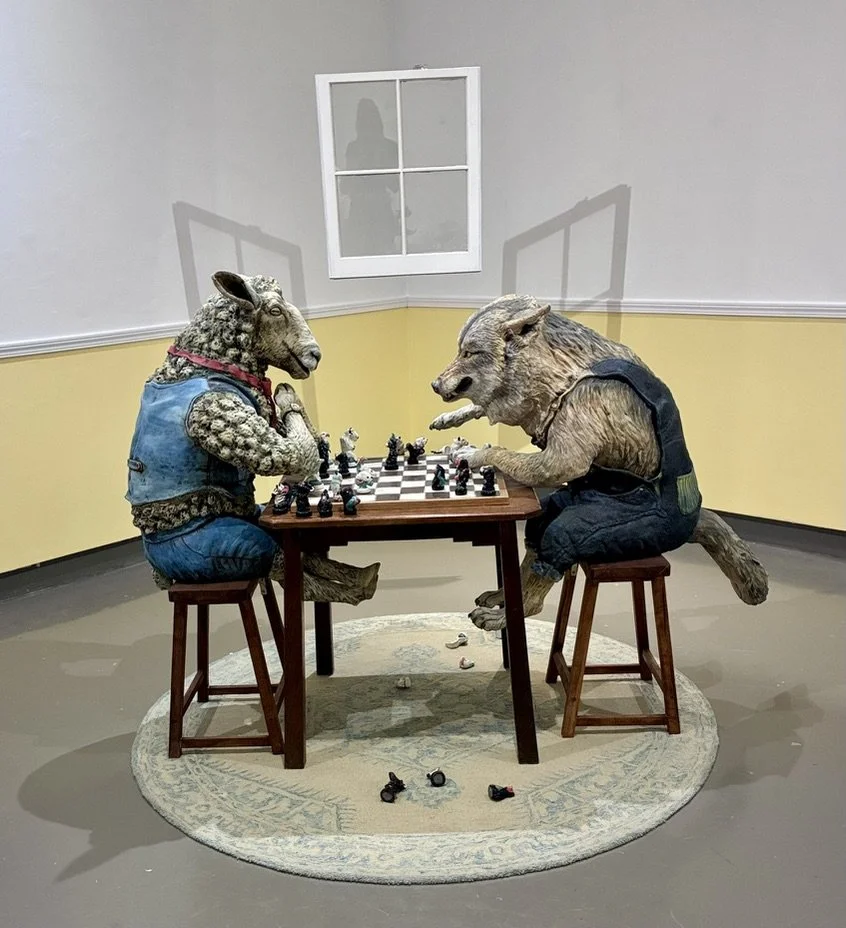
“C′est toujours comme ça dans les contes pour enfants
À chaque fois, c'est le loup qui est le méchant
Ce n′est pas un être humain que tu trahis
Ce n'est pas un être humain que tu trahis”
— Chinese Man
Translated:
“It’s always like that in children’s stories. Every time, the wolf is the villain.”
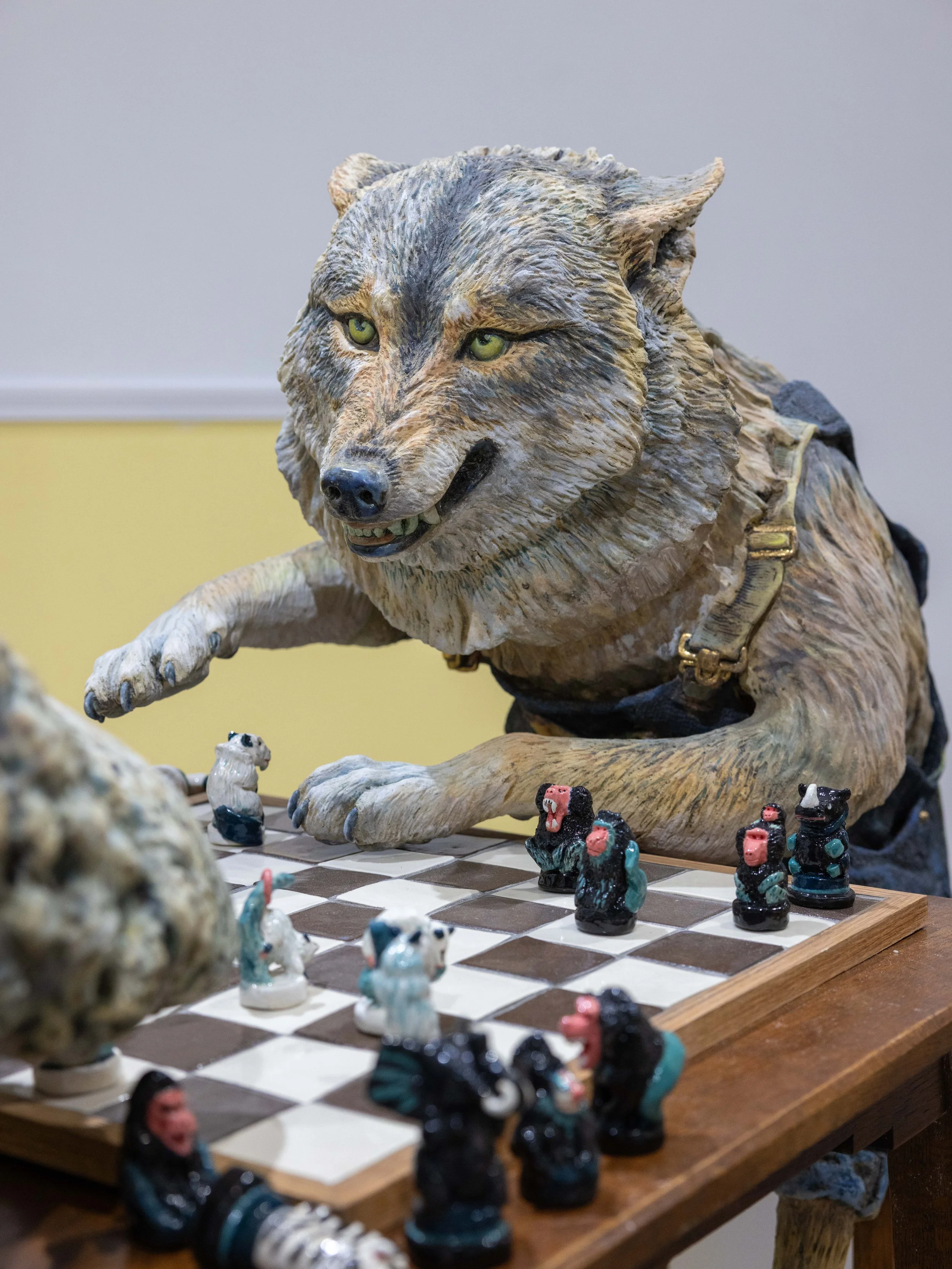
WOLFIE
His teeth are not bared in aggression, but in fear, his tongue slightly visible in a nervous mid-lick; his ears folded back in a defensive posture, signaling caution rather than dominance. Although he makes his move across the chessboard, his agency is precarious, his future remains shaped by forces beyond his control.
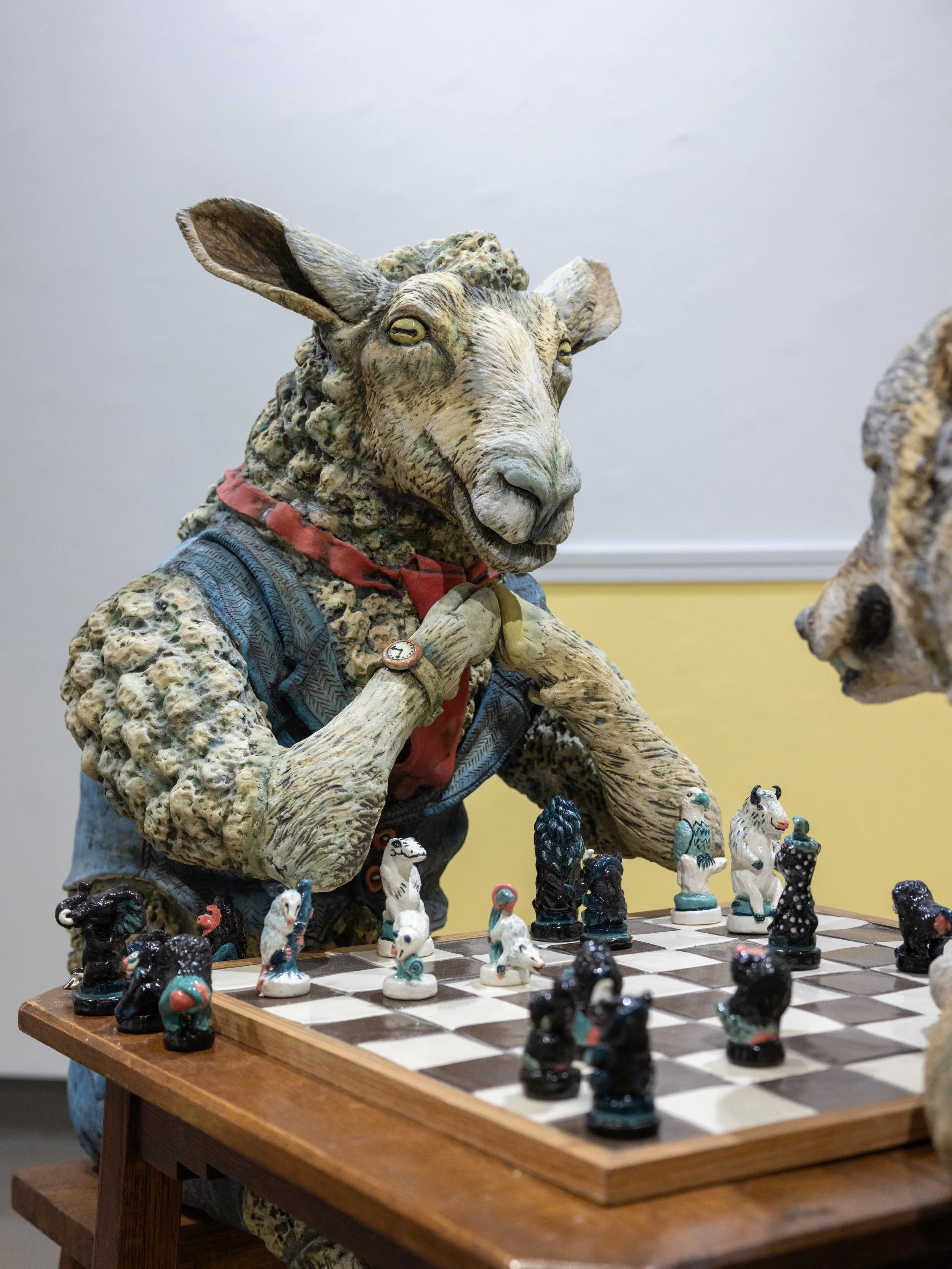
Sheepie
The sheep, seated opposite him, embodies this imbalance as a placeholder for man. By inverting the familiar idiom, the work disrupts expected hierarchies: the predator becomes the vulnerable figure, while the prey assumes the role of authority.
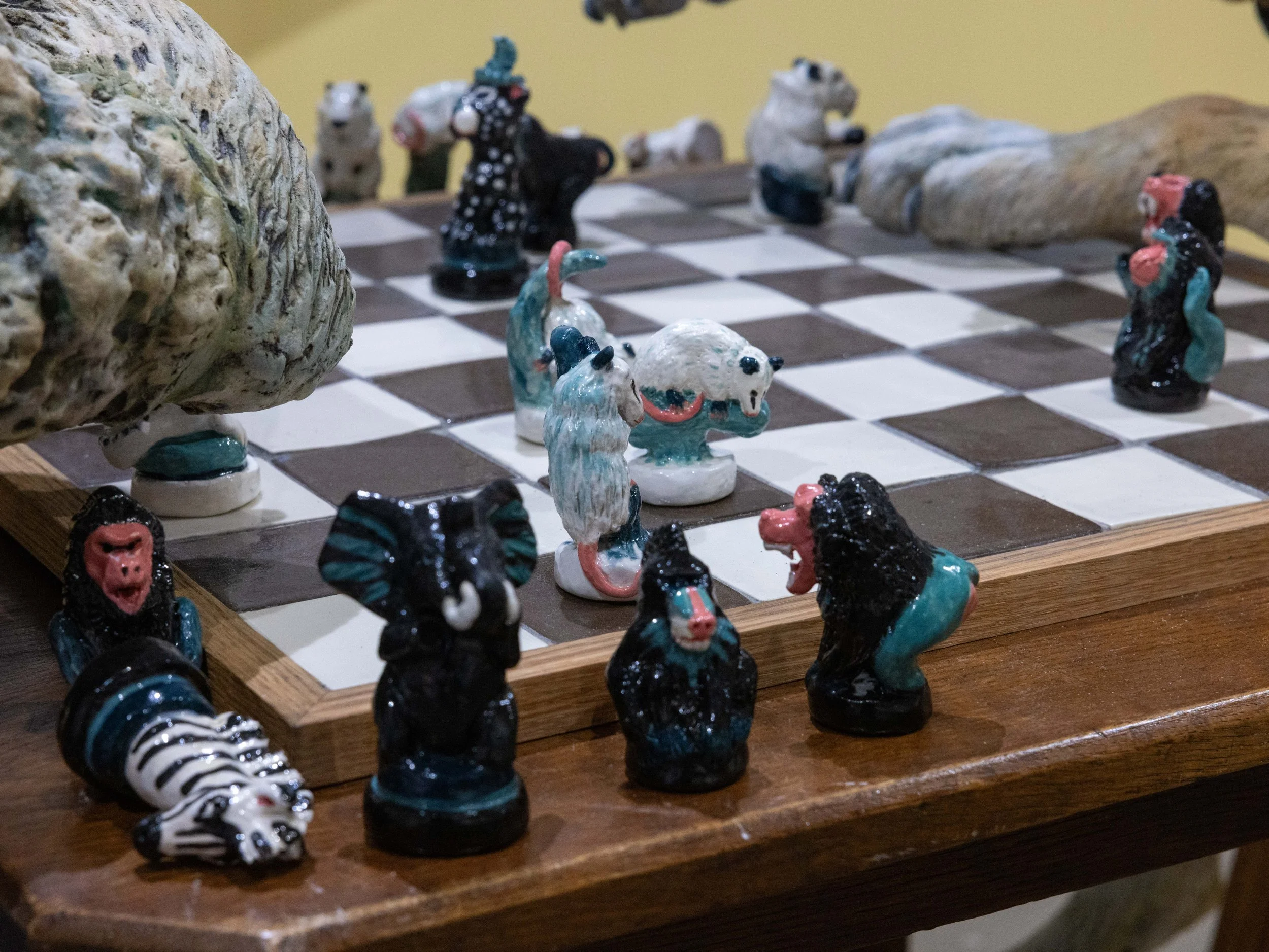
The Chess Board
The characters are both amid a heated game of chess, drawing from the 1999 match between Garry Kasparov and Veselin Topalov. The game at play in the No Need to Huff and Puff scene is considered one of Kasparov’s greatest, often referred to as “Kasparov’s Immortal.” It involves a rook sacrifice and a check that appears easily managed on the surface but ultimately wins the game by deflecting the queen away from defending the king. In this scene, I wanted to show the sheep as the dominant player, giving him the position of white, the winning position. The intention here is to use the structure of the game itself to illustrate the dominance at play between the sheep and the wolf. Here, the sequence of outcomes is not immediately visible, but already determined through positioning, echoing the silent dynamic between man and animal.