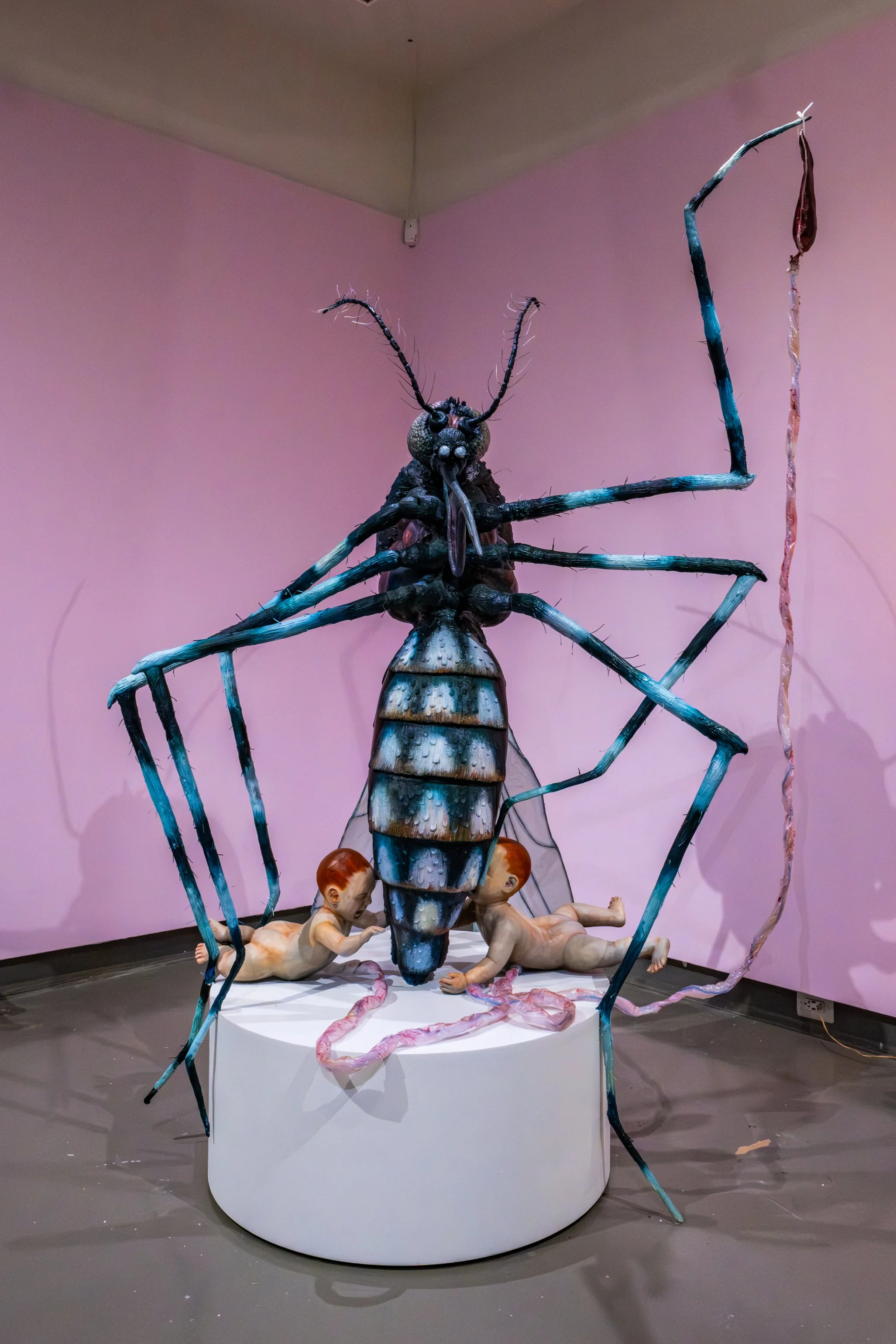
Mother Mosquito
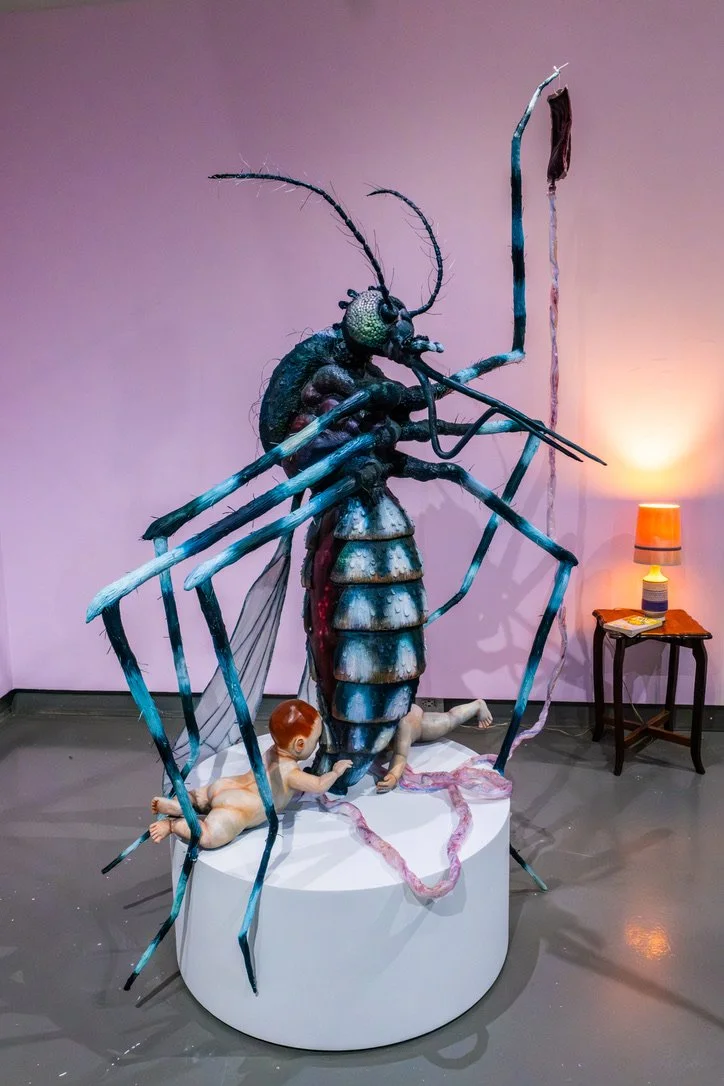
Within my practice, this theoretical inquiry manifests materially. Mother Mosquito, one of the most technically challenging sculptures in this body of work, exemplifies the inversion of human–animal hierarchy. Standing at five and a half feet tall, the figure retains the anatomical structure of a mosquito while adopting human scale and posture. Rules governing where human qualities appear are intentional; the work resists full anthropomorphizing, instead emphasizing the animal body as a site of agency.
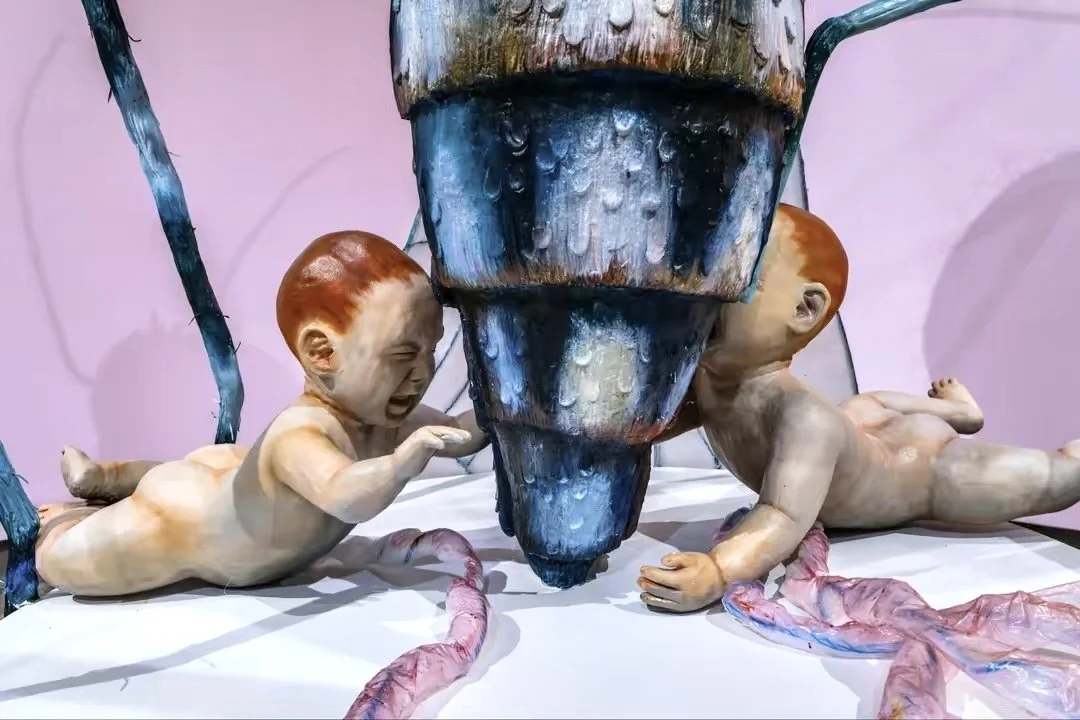
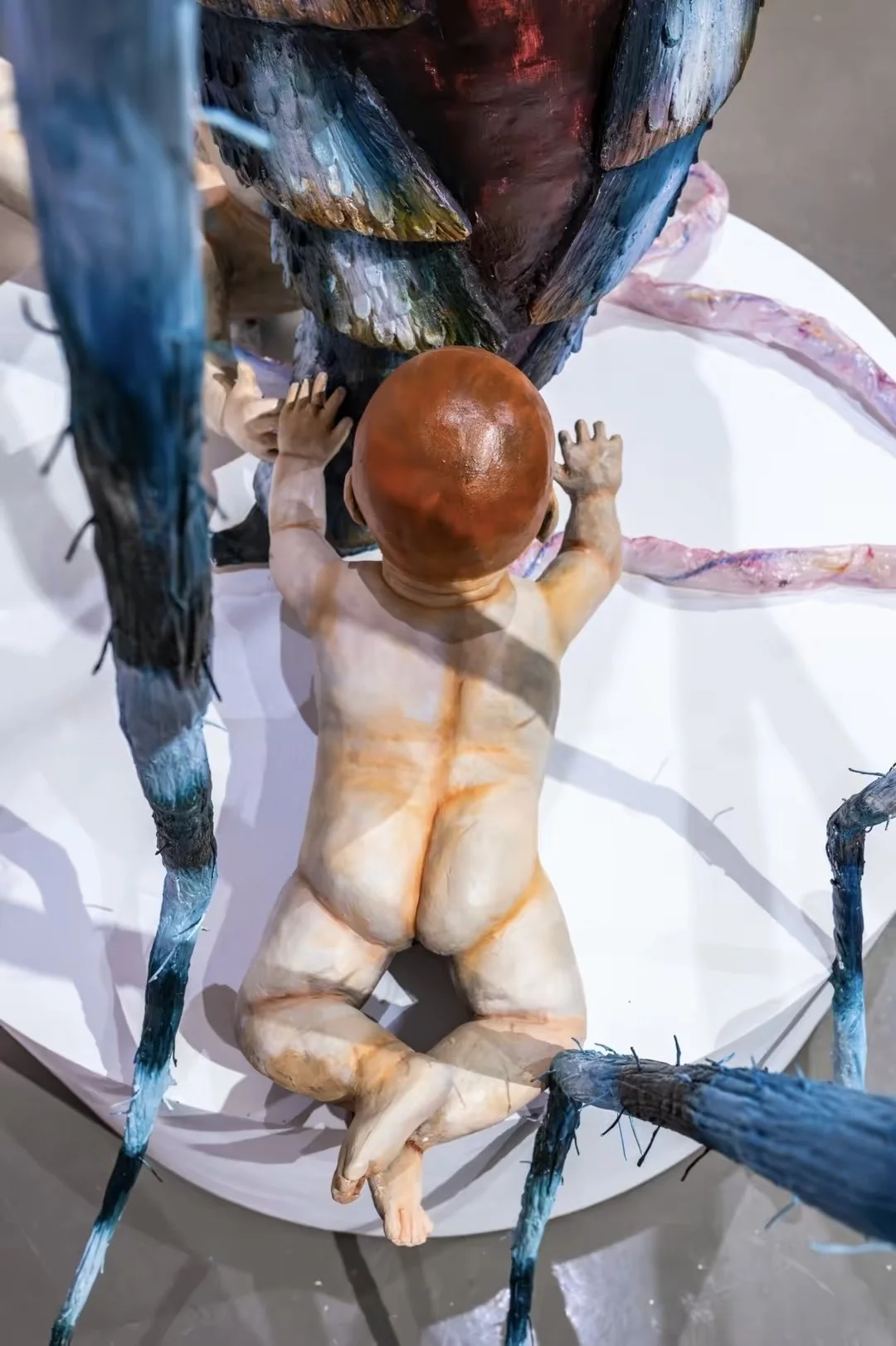
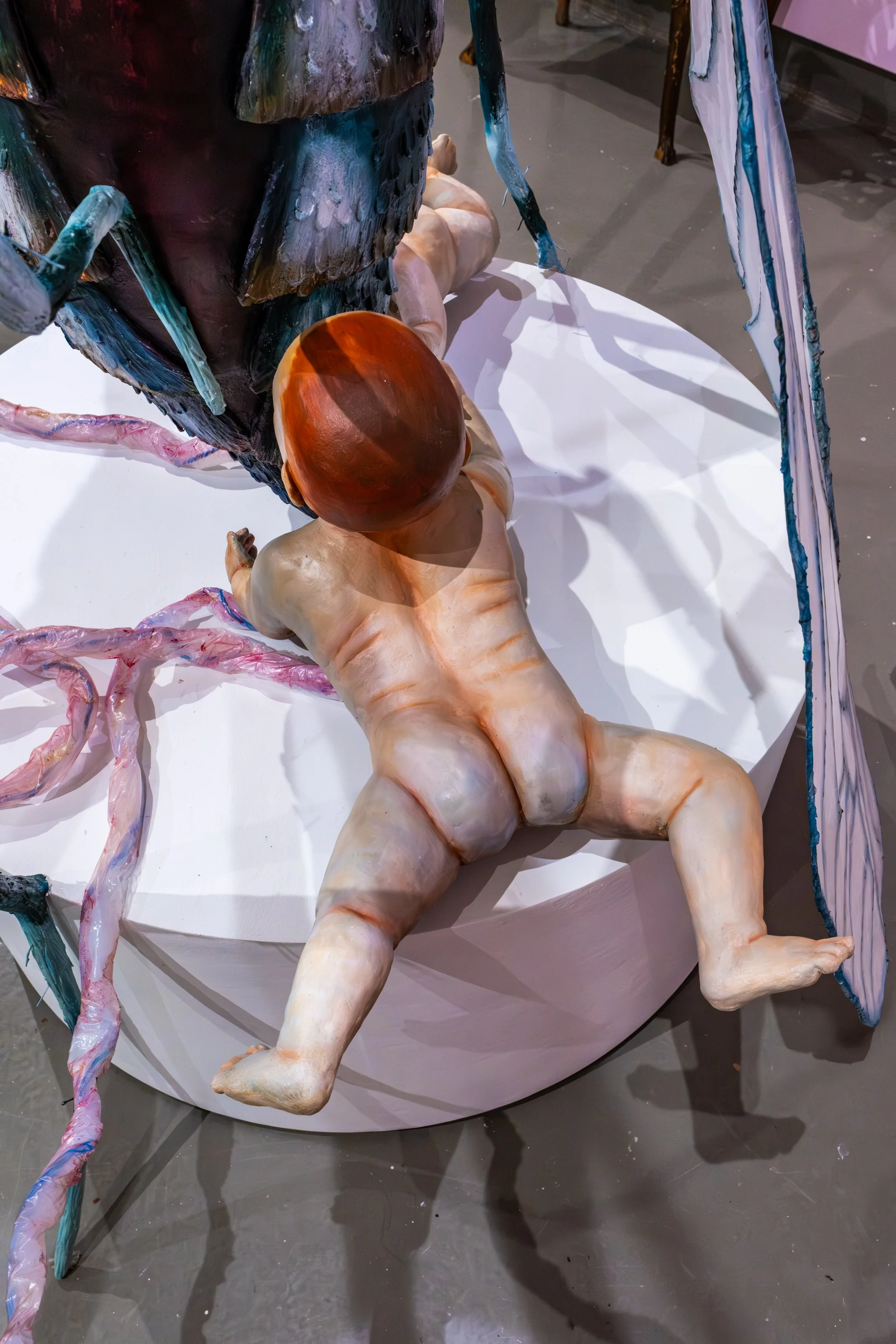
She directs the flow of nourishment, determining when and whether the babies receive sustenance. Their reliance on her underscores a hierarchy in which those who command the resource dictate the conditions of life, a visual parallel to Thrasymachus’s claim in Plato’s Republic that the rules of justice are the rules of the ruling class. Her posture conveys complete authority, while her expression remains unreadable, resisting familiar human emotional cues. The infants’ helplessness contrasts sharply with her dominance, reversing the expected hierarchy between human subject and animal body.